The Undetected Parasite Burden Behind Your Dog's Behavioral Issues (And Why Every Treatment Eventually Stops Working)
 Want to jump ahead? Click to see the protocol I use with my patients
If your dog has persistent behavioral or digestive issues, you've likely gone through the same cycle most owners do.
If you've tried Apoquel or Cytopoint...
If you've made the switch to veterinary diet food...
If you've gone through calming supplements, CBD tinctures, obedience training, and animal behaviorists...
And if your dog is still scratching, gnawing their paws to rawness, scooting across the living room, urinating indoors, or pacing the halls at 2-3AM... you're not the only one dealing with this.
I've practiced veterinary medicine for over 15 years, with my last 8 dedicated entirely to integrative and holistic approaches.
I've treated thousands of dogs whose owners were informed that their issues were "just a behavioral thing" or "just allergies" or "just part of aging."
And what I've discovered stunned me: Roughly 80% of the medications being prescribed for these symptoms are only masking them.
They don't target the hidden driver.
They don't restore anything.
And that's the reason your dog keeps struggling — regardless of how much money you pour into it.
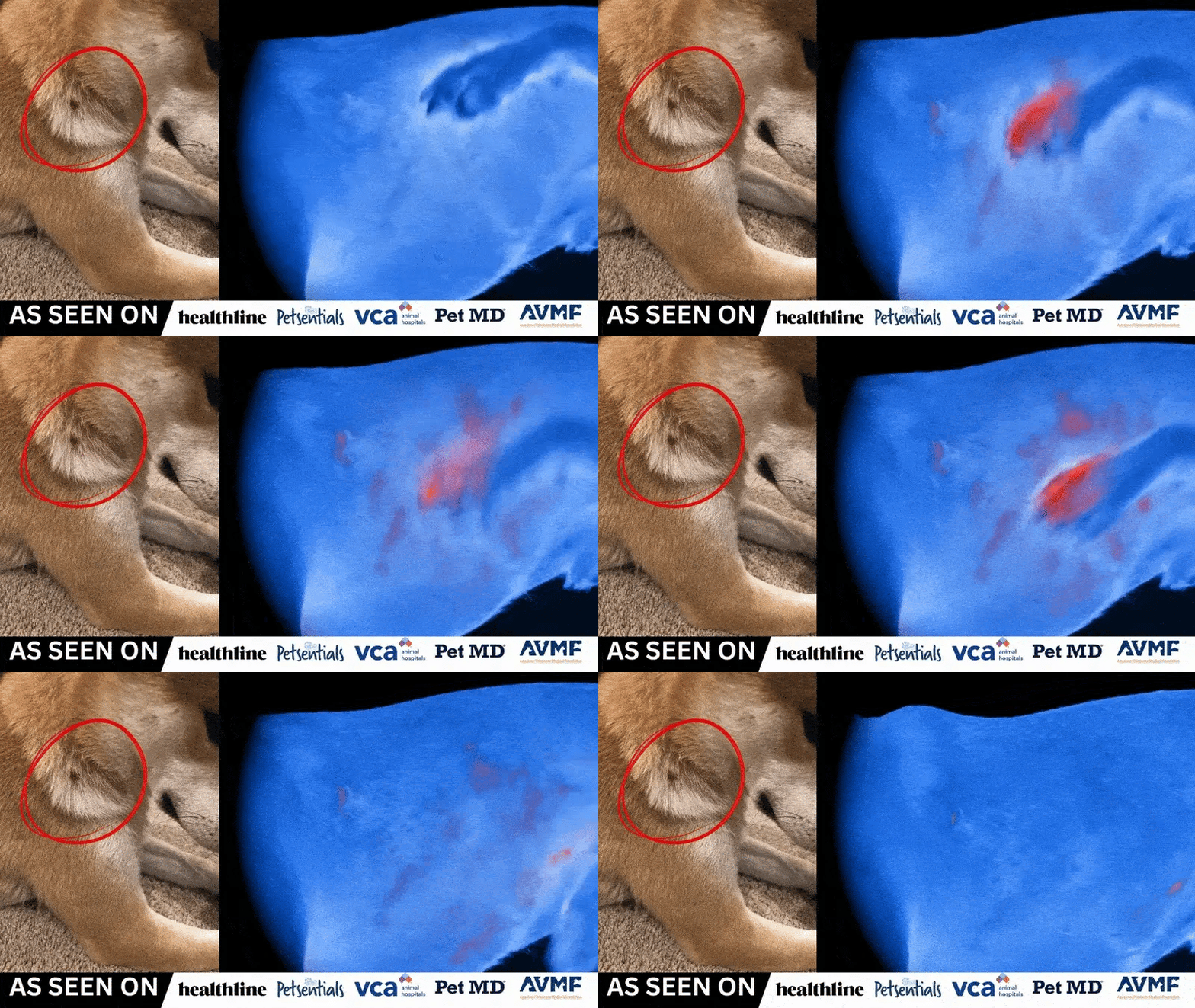
Most Owners Are Treating the Wrong Problem
Initially, it seems straightforward.
Your dog begins scooting.
Begins gnawing at their paws after dark.
Has an accident on the living room floor.
Starts waking you at 3AM, restlessly pacing.
So you do what your vet suggests.
But here's what those treatments actually deliver:
Apoquel + Cytopoint → dial down the immune response affecting the skin, provide short-lived relief, do nothing to restore the gut environment fueling the inflammation.
Calming supplements + anxiety medications → quiet the brain temporarily, don't address why the nervous system is locked in overdrive.
Obedience training + behaviorists → work on the dog's actions, don't touch the biological reason those actions exist.
Prescription diets → eliminate suspected allergens, don't repair the damaged intestinal barrier that was letting those allergens into the bloodstream.
Standard dewormers → eliminate the adult worms a fecal test can detect, completely miss the eggs, larvae, and low-grade burden your vet never identified.
That's the reason you see a brief improvement... followed by nothing.
Because the actual problem isn't the symptoms themselves.
And that realization hit me during one of the most difficult cases I've ever handled.
When Everything I Was Taught Failed in My Own Exam Room
Bear was a 4-year-old rescue — a German Shepherd mix his owner Emma had brought home two years earlier from an overcrowded shelter in Texas.
Emma had done every single thing "correctly":
- High-quality limited-ingredient diet.
- Medicated baths every week.
- Daily Apoquel plus monthly Cytopoint injections.
- Two separate trainers, including one board-certified behavioral specialist.
- CBD oil, L-theanine supplements, and a compression wrap for the overnight pacing.
And yet, Bear scratched his sides raw every single night.
And yet, he dragged himself across the living room rug three or four times daily.
And yet, he had indoor accidents — despite Emma having retrained him on three different occasions.
And yet, he roamed the house between 2 and 3AM every night, keeping Emma from sleeping.
I prescribed more aggressive medications.
Nothing shifted.
We pursued a referral to a veterinary skin specialist.
His condition deteriorated further.
Emma sat across from me in the exam room, tears running down her face, and asked the question that shattered me:
"Why is he still going through this... when I've followed every recommendation they gave me?"
I didn't have a response.
That evening, I went home and committed myself to uncovering the real explanation — regardless of what it might reveal about my own field.
I went back through every peer-reviewed study I could locate on the gut-skin connection, the gut-brain connection, and the relationship between parasites and behavior.
And that's when the picture completely shifted.
The Alarming Hidden Driver: Damaged Gut + Undetected Parasites
We've had this entirely backwards.
❌ It's not "just extreme allergies."
❌ It's not "just behavioral."
❌ It's not "trauma from his shelter background."
❌ It's not "just the aging process."
The true hidden driver is this: Commercial kibble, courses of antibiotics, environmental contaminants, and shelter exposure erode your dog's intestinal lining — building the ideal conditions for parasites and pathogenic bacteria to establish themselves.
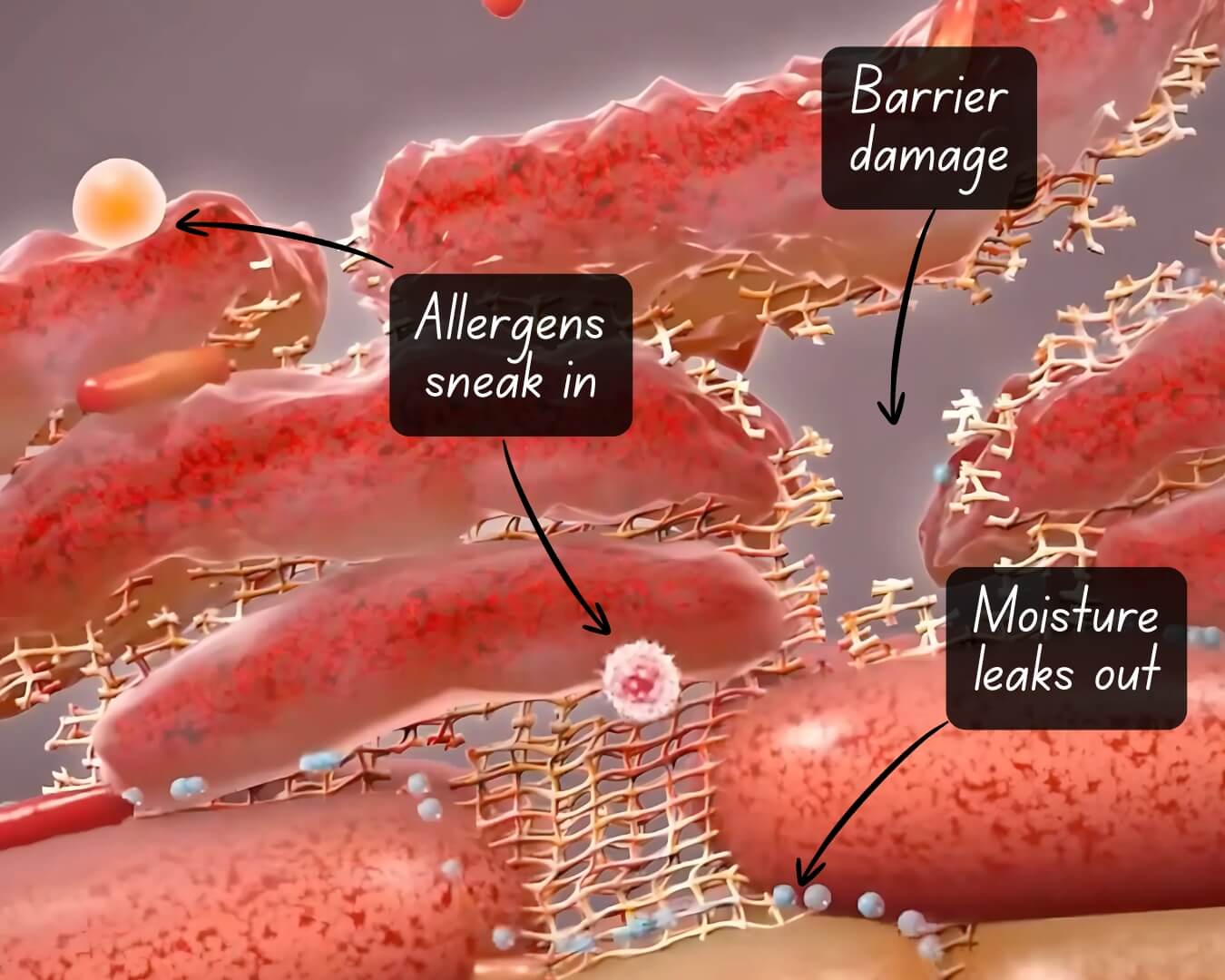
The gut lining — the protective wall separating pathogens from your dog's bloodstream — is just a single cell thick. When it deteriorates, three things happen at once.
First, the gut microbiome falls apart. The beneficial bacteria responsible for producing 90% of your dog's serotonin get crowded out by opportunistic organisms. Your dog's nervous system loses its primary chemical regulator.
Second, parasites establish themselves. Roundworms, hookworms, whipworms, and Giardia discover a welcoming environment and set up subclinical infections — infections at levels so low that routine fecal screening misses them entirely.
Here's something most owners are never told: Research from the 2020 DOGPARCS study revealed that 85% of American dog parks tested positive for intestinal parasites, and CAPC surveillance data shows canine hookworm infections have surged 45% since 2012.
Your dog doesn't need to have visible worms to be carrying a parasite burden.
Third, toxins breach the barrier. The compromised gut lining can no longer prevent irritants, parasite metabolic waste, and inflammatory compounds from entering the bloodstream. Once they go systemic, they provoke reactions throughout the body — skin, behavior, sleep patterns, digestion.
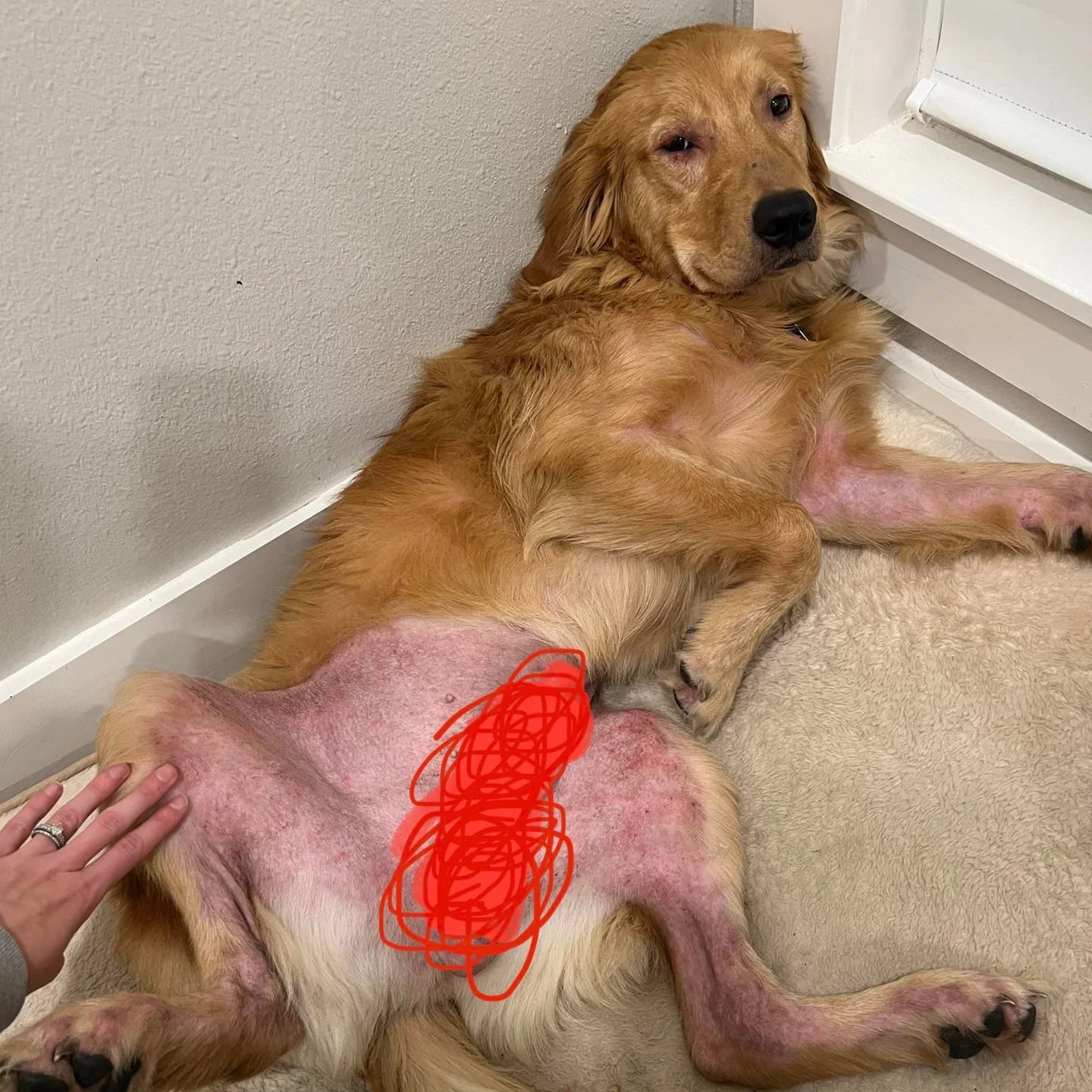
That's the relentless paw chewing.
The scooting that refuses to stop.
The indoor accidents that no amount of retraining resolves.
The 3AM restlessness that keeps intensifying.
The walk reactivity that your trainer can't break through.
Medications suppress each symptom individually.
But they don't repair the gut generating all of them.
That's the reason they help temporarily — then stop.
The damage keeps progressing.
If you've felt like you're losing your mind spending thousands with zero lasting results — you're not losing your mind.
The treatments were never engineered to resolve this.
And here's what started to make me angry:
Holistic veterinarians and integrative practitioners have understood the gut-brain-skin connection for years. But conventional general practice vets aren't educated on it during their training. That knowledge gap has kept your dog in pain while you've been writing checks.
Why Standard Treatments Fall Short (And Always Will)
I evaluated every common intervention against this reality.
Apoquel?
Suppresses the skin's immune signaling. Doesn't restore the gut.
Falls short.
Cytopoint?
Interrupts the itch signal. The gut continues deteriorating underneath.
Falls short.
Calming supplements?
Quiet the brain for a few hours. Don't address the gut dysfunction producing the anxiety.
Falls short.
Standard dewormers (Panacur, Drontal)?
Eliminate adult worms detectable on a fecal screen. Don't touch eggs, larvae, or the damaged gut environment that invited them in initially. The cycle restarts within weeks.
Falls short.
Omega-3 fish oil?
Reduces inflammation. Doesn't address what's generating the inflammation.
Falls short.
Probiotics on their own?
Provide microbiome support. Can't successfully repopulate a gut still being overrun by opportunistic organisms.
Falls short.
Every single one misses the core mechanism: gut damage + undetected parasite burden.
Why hasn't the public heard about this? Because structural gut repair isn't dispensed through veterinary offices.
There's no recurring revenue stream in resolving the root cause. The system generates profit from the monthly Apoquel renewal, the quarterly Cytopoint appointment, the annual immunotherapy evaluation.
Your dog remaining symptomatic is their revenue model.
The Clinical Secret: Multi-Botanical Protocol in Liquid Form
Your dog's gut requires a comprehensive protocol working across every parasite life stage and every dimension of gut dysfunction:
Black Walnut Hull → Contains juglone, which interferes with parasite metabolism and assists the body in expelling adult worms.
Wormwood → Contains artemisinin compounds employed for centuries to address parasites at the larval and egg stages that conventional dewormers miss entirely.
Clove → Rich in eugenol, a naturally occurring compound that helps sustain a healthy gut environment and addresses opportunistic organisms.
Oregon Grape Root → A natural source of berberine, clinically investigated for targeting protozoa like Giardia that fecal screening routinely fails to detect.
Pumpkin Seed → Cucurbitacin compounds traditionally employed to help immobilize worms so the body can eliminate them naturally.
Olive Leaf → Oleuropein-rich leaf providing natural antimicrobial and immune support for the body's innate defense against yeast and opportunistic organisms.
Postbiotic Blend → A targeted postbiotic formulation that restores gut flora during and after the cleanse, keeping the gut environment hostile to parasite recolonization.
Omitting even one of these means incomplete restoration.
The cleanse without the postbiotic destabilizes the gut.
The postbiotic without the cleanse gets overrun by the parasite burden.
The herbs without each other leave different parasite life stages untouched.
Why the liquid format matters: Chews and powders must pass through digestion before their active compounds reach the intestinal lining — the exact location where parasites reside. The majority of active botanicals get degraded by stomach acid before they ever make contact with the gut wall.
Liquid herbal drops go to work on contact. The active compounds interact with the intestinal lining where they're needed most, rather than after a 4-hour digestive detour.
Your dog's system can actually utilize them.
This isn't novel — it's simply been kept outside mainstream veterinary practice until now.
One company is making this complete protocol accessible: Vana Balance Parasite Cleanse Drops.

Evidence It Delivers
When I introduced this protocol into my clinic, the outcomes astonished me.
Across a case series of 200+ dogs presenting with treatment-resistant chronic symptoms — scooting, paw chewing, indoor accidents, nighttime restlessness, reactivity — 184 demonstrated meaningful improvement within 14 to 21 days.
Owners reported:
- Scooting ceased entirely within the first week.
- Paw chewing reduced dramatically — some dogs stopped within days.
- Indoor accidents resolved without any additional behavioral work.
- Dogs finally sleeping the whole night without restless pacing.
- Walk reactivity noticeably calmer and more manageable.
- Coat quality visibly improving, with old bald patches filling back in.
- Stools firming up and becoming consistent.
Emma started Bear on the protocol.
By day 5, the 3AM pacing had stopped.
For the first time in 18 months, Emma slept through until morning.
By week 2, Bear's paws were no longer raw. The scooting had ceased completely.
At week 3, Emma told me through tears:
"It feels like I'm living with a completely different dog. He's settled. He's sleeping. He hasn't had a single accident. I had no idea he was capable of being like this."
And she was far from the only one.

What Healthy Actually Looks Like
Most owners have accepted chronic symptoms as "just how their dog is."
- The scooting they've stopped even registering.
- The paw chewing they assume is just a habit.
- The indoor accidents they've blamed themselves for.
- The overnight pacing that's robbed them of their own sleep.
- The walk reactivity that's turned every outing into an ordeal.
But that's not how it has to be. That's preventable suffering.
With proper gut restoration and cleansing, dogs can:
- Sleep peacefully through the entire night — owner and dog both.
- Have calm, regulated behavior on walks and inside the home.
- Stop the scooting, stop the paw chewing, stop the accidents.
- Come off the Apoquel, come off the Cytopoint, come off the calming supplements.
The scope of unnecessary suffering is staggering.
Millions of dogs are being medicated right now for symptoms of a gut condition that nobody is investigating.

Why Move Now
The integrative veterinary community is finally discussing the gut-behavior-skin connection openly.
But here's the reality:
Vana Balance is currently running a Founder's Launch promotion — and the value is substantial.
Buy 2 bottles, get 1 free. Buy 3, get 2 free. Plus free shipping and a 90-day money-back guarantee — the most generous in the entire category.
The limitation? Liquid botanical formulas are significantly harder to manufacture than cheap filler-based chews. Their supplier has restricted production capacity, and this is their initial manufacturing run.
And demand has been outstripping supply since they launched.
I'd secure it while the Founder's Launch pricing is still active.
P.S. Since Bear's recovery, I've become deeply committed to spreading this information.
I've shared it with every owner in my practice, and the outcomes speak for themselves.
"We'd poured $4,200 into Luna's skin and behavioral issues this year alone. Within 3 weeks of beginning the cleanse, we canceled her dermatology follow-up — because there was no longer a reason for it. Her paws healed, the scooting stopped, and she's sleeping the whole night through for the first time since we brought her home."
"Cooper's indoor accidents had been an ongoing battle for two years. We'd retrained him three separate times. My trainer threw in the towel. After 14 days on this protocol, he hasn't had an accident in six weeks. I didn't trust it until I saw it with my own eyes."
"Daisy's walk reactivity had gotten so severe I'd stopped taking her outside altogether. My behaviorist said medication was the next step. I tried this first as a final attempt. After completing the full 21-day protocol, she's more composed on walks than she's ever been. We're still working with the trainer — but now the training actually takes hold."
Your Decision
You're looking at three paths:
Option 1: Continue using medications that don't address the gut dysfunction. Continue watching your dog struggle. Accept the idea that "this is just who they are."
Option 2: Pursue stronger prescriptions, behavioral medications, or another round with a different trainer. Hope this attempt succeeds where the others fell short.
Option 3: Try the holistic approach that restores the gut environment responsible for the symptoms.
The answer seems obvious to me. But the decision is yours.
Join Thousands of Dog Owners Who've Restored Their Dogs' Health
If you're ready to go after the root cause, here's what to do:
1. Click the button below to check whether stock is still available.
2. Select your package (the complete protocol runs 21 days — most owners choose multi-bottle packages to have a second cleanse ready for 6 months down the road).
3. Begin the simple daily ritual — add drops to their food each morning.
4. Watch for initial signs of change (days 3–7).
5. Observe behavioral and digestive shifts (weeks 1–2).
6. Complete the full gut restoration (weeks 3–4).
Remember: You're covered by the 90-day guarantee. You have nothing to lose except the symptoms you've been managing for years.
Click above to see if Vana Balance is still offering their limited sale
Holistic Veterinarian